Headingly Lane Wastewater Rising Main
Infrastructure for a growing Richmond.
Project Overview
Client Tasman District Council
Location Richmond, Tasman
Service Wastewater Infrastructure
Project Value $1.64M
Duration 18 months
Completed 2022
-
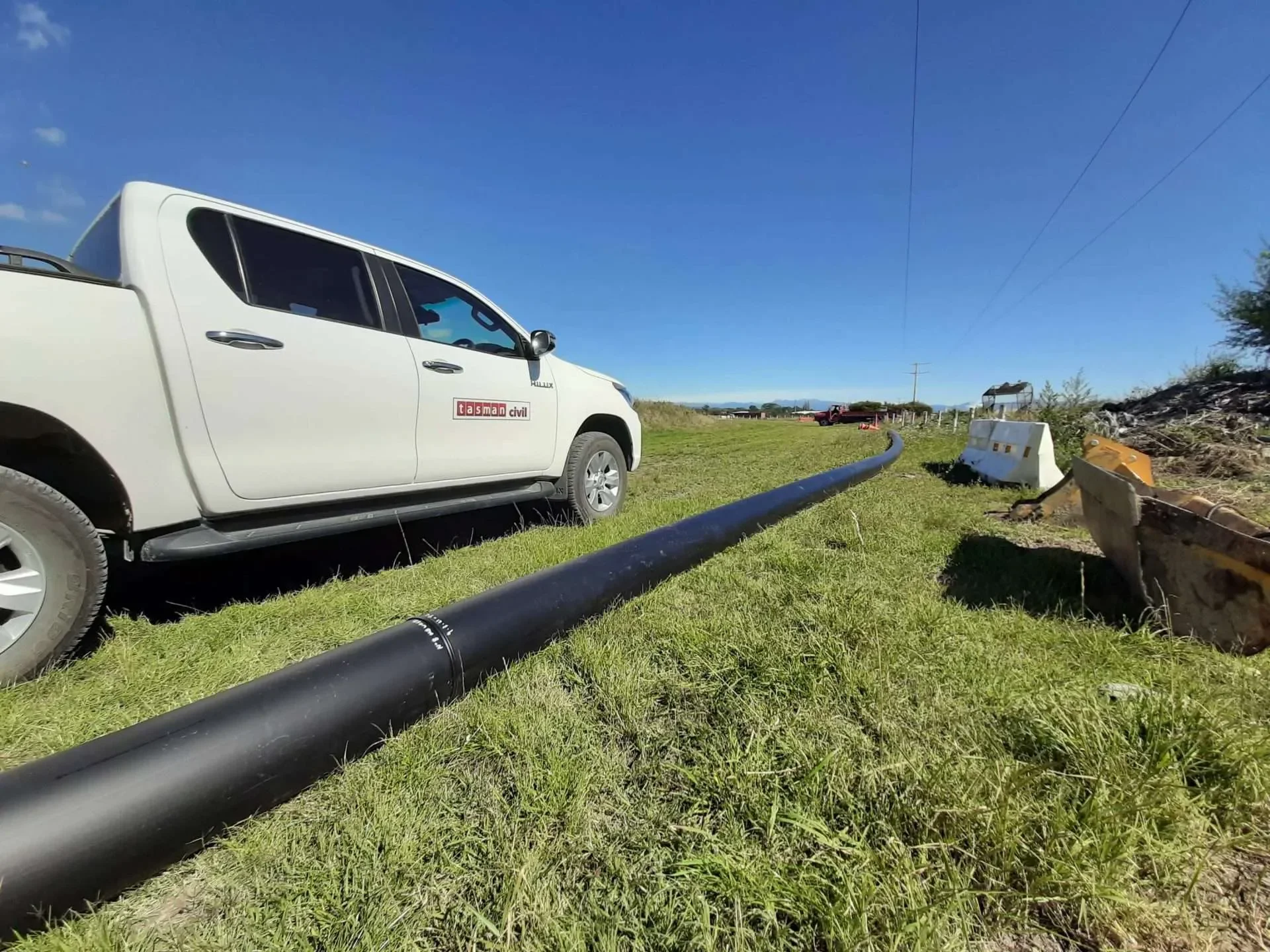
1.6km wastewater rising main
Collaborative redesign reduced project risk
Delivered below original contract value
Zero failed PE pipeline welds
Construction through an operational school environment
Zero Lost Time Injuries (LTIs)
-
As Richmond continues to grow, so too does the demand on its wastewater network. The Headingly Lane Rising Main project was a critical infrastructure upgrade, delivering a new 1.6-kilometre pressure main connecting the Headingly Lane Pump Station with the Beach Road/Fittal Street Pump Station.
The project presented far more than a conventional pipeline installation. The proposed alignment crossed an operational school, a former landfill site, busy public roads, recreational facilities and existing underground services. The original construction methodology also relied on long directional drill installations, introducing significant technical, financial and programme risk before construction had even begun.
-
Success would ultimately be measured by more than installing new infrastructure.
The project needed to maintain access for local businesses, the Refuse Transfer Station, the Great Taste Trail, Freedom Camping facilities and nearby residents, while construction through One Global School could only occur within a tightly controlled holiday window. At the same time, the project team needed to safely manage tidal groundwater, existing underground services and challenging ground conditions without compromising quality, programme or public confidence.
-
Tasman Civil approached the project as a collaborative problem-solving exercise from day one. Working closely with Tasman District Council and Tonkin + Taylor, the team challenged the original methodology, undertaking further investigations and developing alternative construction solutions that significantly reduced project risk. Replacing large sections of the proposed directional drilling with open trench construction created a safer, more practical and ultimately more cost-effective outcome for everyone involved.
That collaborative mindset continued throughout delivery. A shared Project Charter aligned the client, consultant and contractor around common objectives, while regular site meetings, team workshops and open communication ensured decisions could be made quickly and confidently as the project evolved.
Technically, the works demanded precise management of deep excavations, dewatering, service crossings and polyethylene pipeline construction. Every PE butt weld and electrofusion weld passed quality assurance testing first time, allowing the full 1.6-kilometre pipeline to be pressure tested successfully as a single installation before commissioning.
-
The completed rising main provides Richmond with a more resilient wastewater network capable of supporting future growth, while demonstrating the value of early contractor involvement and genuine collaboration.
Despite significant changes to the delivery methodology and additional scope during construction, the project was completed below the original contract value, with zero Lost Time Injuries, no failed pipeline welds and strong stakeholder support throughout the works. More importantly, the project reinforced Tasman Civil's reputation for bringing practical thinking, technical expertise and collaborative leadership to complex infrastructure projects—finding better ways forward rather than simply building what was originally drawn.
-
Wastewater Infrastructure
Pressure Mains
PE Pipeline Installation
Polyethylene Butt & Electrofusion Welding
Deep Excavation & Dewatering
Traffic Management
Stakeholder Engagement
Collaborative Contract Delivery
Value Engineering
Environmental Management
Quality Assurance & Commissioning